
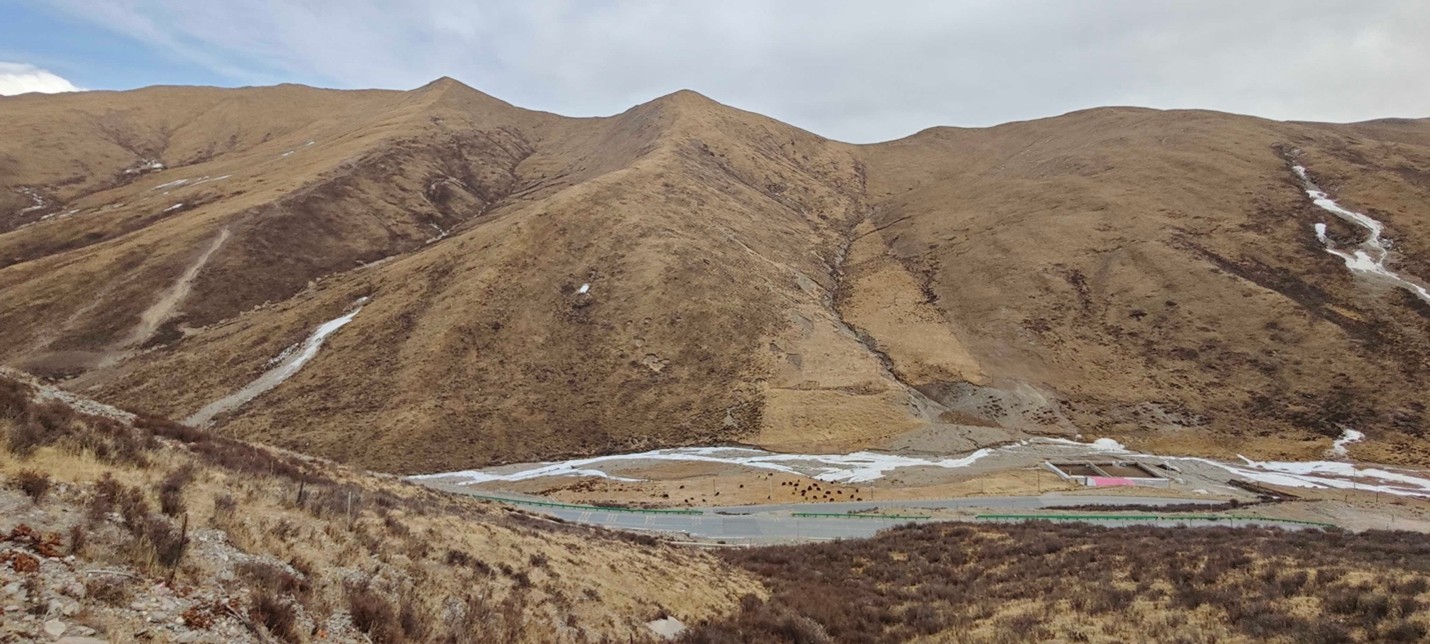
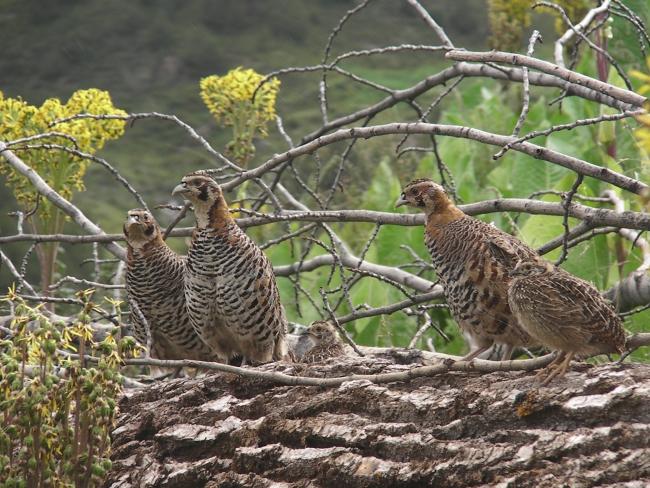
A new study led by Sangeet Lamichhaney, Ph.D., associate professor of Biological Sciences at 性福五月天 University, uncovers how mountain landscapes shape the survival of high鈥慳ltitude species living in some of the most extreme environments on Earth. The research, published in , focuses on the Tibetan Partridge (Perdix hodgsoniae) and shows how geography and climate work together to influence adaptation, genetic diversity and long鈥憈erm resilience.
The Sino鈥慔imalayan region, often called the 鈥淩oof of the World,鈥� is home to dramatic elevation gradients, rugged terrain and sharp climatic contrasts. For species already living at the highest elevations, there is no higher ground to escape warming temperatures. Their survival depends on their ability to adapt.
Lamichhaney has long studied the genetic basis of extreme adaptation in birds across diverse environments, from the Gal谩pagos Islands to the Himalayas.
鈥淥ur study shows that geography and climate interact in powerful ways to shape how populations adapt鈥攂ut also how vulnerable they may become,鈥� Lamichhaney said. 鈥淚n mountain systems, isolation can promote diversification, but it can also restrict future resilience. Understanding this balance is essential if we want to predict which populations are most at risk under rapid environmental change.鈥�
A Comprehensive Look at Adaptation Across the Himalayas
The research team combined whole鈥慻enome sequencing with ecological, climatic, landscape and morphological data to examine how Tibetan Partridge populations differ across arid western and humid northeastern mountain systems. This integrative approach allowed the team to identify both current patterns of adaptation and potential vulnerabilities under future climate scenarios.
鈥淢ountains are a double-edged sword,鈥� Prashant Ghimire, the study鈥檚 first author and a Ph.D. candidate in Lamichhaney鈥檚 lab, said. 鈥淭hey generate biodiversity by isolating populations and allowing them to diverge. But that same isolation can reduce genetic diversity and constrain a species鈥� ability to adapt when climates change rapidly.鈥�
Ghimire also highlighted the analytical framework behind the project.
鈥淒eveloping an integrated pipeline was central to this project," Ghimire said. "We combined whole-genome sequencing with ecological, climatic, landscape connectivity and morphological data to understand not just where populations differ genetically, but why they differ."
"By linking genes to environment and geography, we can identify the mechanisms driving adaptation and better predict which populations are most vulnerable under future climate scenarios.鈥� - Prashant Ghimire
Geography, Climate and the Limits of Survival
The study found that major mountain ranges act as natural barriers, limiting movement and gene flow between populations. Over time, this isolation has produced distinct genetic signatures and measurable physical differences, including variation in traits such as beak length.
Climate also plays a key role. In the dry western regions, populations show adaptations tied to temperature, while northeastern populations exhibit adaptations linked to precipitation. These contrasting pathways reflect how climate gradients and topography drive rapid divergence.

Collecting samples across such a vast and rugged region required significant effort.
鈥淪ampling birds across the entire Sino-Himalayan landscape is incredibly demanding,鈥� Nan Wang, associate professor at Beijing Forestry University and shared first author on the study, said. 鈥淭hese populations occur in remote, high-altitude terrain with limited accessibility and extreme weather conditions. By systematically sampling across both arid western and humid northeastern regions, our team was able to capture the full environmental and geographic variation shaping this species鈥攕omething that is rarely achieved at this scale.鈥�
Identifying Populations Most at Risk
The team also assessed 鈥済enomic offset,鈥� a measure of how much genetic change would be needed for populations to remain adapted under future climate conditions. Western populations showed higher predicted genomic offset, suggesting they may face greater challenges as temperatures rise.
At the same time, the study identified potential climate refugia and habitat corridors that could help maintain gene flow and support long鈥憈erm persistence. The wetter Hengduanshan region stood out as an area with higher genetic diversity and lower predicted climate risk.
Support from 性福五月天鈥檚 Environmental Science and Design Research Institute
The project received support from 性福五月天鈥檚 Environmental Science and Design Research Institute (ESDRI) through a graduate student award that helped advance the study鈥檚 integrative analyses.
鈥淪upporting interdisciplinary research like this is exactly what ESDRI aims to do,鈥� Christie Bahlai, Ph.D., associate professor and co鈥慸irector of ESDRI, said. 鈥淏y combining genomics, climate data and landscape ecology, this project highlights how graduate research can generate innovative tools for understanding biodiversity under global change. We are proud to have supported Prashant鈥檚 work on this important effort.鈥�
A Framework for Conservation in a Changing Climate
By integrating genomic data, climate projections and landscape connectivity, the study offers a framework that can be applied to other mountain species facing similar pressures. The findings emphasize that survival in high鈥慹levation ecosystems depends not only on local adaptation but also on maintaining connectivity across landscapes.
On the 鈥淩oof of the World,鈥� where species have nowhere left to climb, their future may depend on their ability to adapt鈥攁nd on efforts to protect the environments that make that adaptation possible.
###